Is a Stud Finder a Metal Detector?
A stud finder can detect metal, but only if it has a metal-scan mode or a magnetic sensor. Some models locate metal behind a wall, while others only find wood studs or the fasteners holding them.
On this page (7 sections)
A stud finder can detect metal, but only if it has a metal-scan mode or a magnetic sensor. Some models locate metal behind a wall, while others only find wood studs or the fasteners holding them.
The term “stud finder” covers different tools. Check what each model detects and how it signals a target before relying on it to locate framing, pipes, or other objects.
Is a stud finder a metal detector?
Some stud finders also detect metal, but they aren't all-purpose metal detectors. Their main job is to help locate wall framing, and metal detection may be one of several modes.
A magnetic finder senses certain metal fasteners, such as screws or nails, that attach drywall to a stud. That can help you trace a stud line, but a fastener reading does not mean the tool can detect every metal object in the wall.
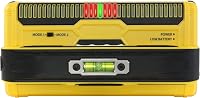
Electronic scanners may offer a separate metal mode. For example, the Zircon MultiScanner A200 has a Metal Scan mode for locating metal behind walls, alongside modes for finding wood or metal stud edges and centers.
The result is a detection signal, not a full description of what lies behind the wall. A scanner may help you find a target, but it won't necessarily tell you whether that target is a pipe, a stud, or another metal object.
What kinds of metal can a stud finder detect?
It depends on the sensor and scan mode. A magnetic tool reacts to some magnetic metals, while an electronic scanner with a metal mode may locate a broader range of metal targets.
Metal types matter. Steel fasteners and framing are ferrous, while copper pipes are nonferrous.
A simple magnetic finder may not respond to copper the way it responds to steel, so check the tool’s stated detection targets.
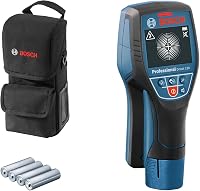
Some wall scanners name specific targets. Bosch says its GMS120-27 detects wood studs, metal framing, copper pipes, and live AC wiring behind drywall.
Its display indicates the center of an object and identifies material.
A target signal still needs interpretation. If you need to find the center of a stud or understand the scanner’s alerts, compare the features described in our guide to stud finder sensor types.
Does a magnetic stud finder find the whole stud?
Usually, a magnetic stud finder locates metal fasteners rather than the stud’s full width. Find several fasteners in a vertical line to estimate where a wood stud runs.
That method can work when drywall screws or nails are present and close to the surface. It may be less useful if the fasteners are deep, missing, or arranged in a way that makes the line hard to follow.
An electronic scanner may instead show stud edges, centers, or width, depending on the model. Franklin Sensors says the ProSensor M150 detects the full width of wood and metal studs, with LEDs that indicate the stud and center.
For a closer look at false readings and scan technique, see what affects stud finder accuracy. Scan from more than one direction when a reading seems unclear.
Can a stud finder detect pipes or wires?
Some wall scanners have separate modes or alerts for metal and live wires, but a reading doesn't identify every hidden hazard. Check the tool’s stated capabilities and treat an uncertain signal as a reason to stop and investigate.
A metal scan can help locate some pipes, but not every stud finder includes one. A live-wire warning is also a distinct feature from metal detection; one should not be assumed from the other.
Use care around outlets, switches, plumbing fixtures, and areas where pipes or wires may run. Don't drill just because one scan shows no warning.
For more on scanner limits, read whether stud finders detect wires and pipes.
How do you scan for metal behind a wall?
Use the scan mode intended for the target, calibrate as directed, and move the tool slowly. Mark a signal, then scan again from another direction to check whether the location makes sense.
For the A200, Zircon instructs users to place the scanner flat on the wall, press and hold the power button, and wait for the calibration beep before sliding it. Its instructions also say not to move the scanner during calibration.
A slow second pass can help you compare the signal and mark likely edges or centers. Wall material and surface conditions can affect readings, so follow the manual if the scanner signals an error or gives inconsistent results.
Don't treat one beep or display mark as proof that a drilling spot is clear. If you can't tell what a target is, move the planned hole or get help from someone qualified to assess the wall.
Which stud finder should you use for metal?
Choose a tool based on the target you need to locate. A magnetic finder can help trace fasteners, while a scanner with a metal mode is more suited to searching for metal behind a wall.
The Zircon MultiScanner A200 is a fit when you want distinct stud and metal scan modes. The Bosch GMS120-27 names metal framing and copper pipes among its detection targets, while the Franklin Sensors ProSensor M150 indicates stud width and center.
Before buying, check whether the scanner identifies your target material, whether it has the scan mode you need, and how its instructions handle calibration. For wall-specific limits, see stud finders for plaster and lath walls.
What should you remember before drilling?
A stud finder can act as a metal detector when its features include metal sensing, but the reading may only indicate a target, not what the target is. Match the tool to the material and scan mode you need.
Use a magnetic finder to trace likely fastener lines. Choose an electronic wall scanner with a named metal mode or target list if you need to locate metal framing or pipes, and stop if you can't interpret a signal safely.
If your main goal is finding a reliable mounting point, learn how the sensor works in our stud finder sensor guide before you scan.
Frequently asked questions
Is a stud finder the same as a metal detector?
No. A general metal detector is designed to locate metal, while a stud finder is made to locate framing and may include metal detection as one feature.
Check the modes and target types for the model you use, because some find metal studs or pipes and others only detect wood studs or fasteners.
Can a magnetic stud finder detect pipes?
A magnetic stud finder can respond to ferrous metal, such as steel fasteners or some pipes, but it may not locate nonferrous materials such as copper. A magnetic response also doesn't identify what the object is, so use other information and avoid drilling until you understand what's behind the wall.
Can an electronic stud finder detect metal studs?
Some electronic stud finders detect metal studs, but the feature varies by model. Look for a dedicated metal mode or a clear statement that the scanner locates metal framing, then follow its calibration and scanning steps.
A wood-stud reading alone doesn't confirm that a wall has metal framing.
Will a stud finder tell me whether a metal object is a pipe?
Usually, a metal reading only signals that metal may be behind the wall; it doesn't prove the object is a pipe. Some scanners identify material types, but even that doesn't show the object's purpose or path.
Scan from more than one direction and use care before drilling.