Do Stud Finders Work on Plaster Walls?
Yes, some stud finders can work on plaster walls, but plaster and lath may cause confusing readings. Scan slowly, check from more than one direction, and confirm the stud before drilling.
On this page (8 sections)
- Do stud finders work on plaster and lath walls?
- Why can plaster cause false readings?
- How should you scan a plaster wall?
- What should you do when readings don't agree?
- Can a wall scanner help with plaster?
- How do you check for wires and pipes before drilling?
- Which stud finder should you use on plaster walls?
- What is the safest way to find a stud in plaster?
Yes, some stud finders work on plaster walls, but plaster and lath can make readings less clear. Scan slowly, compare readings from more than one direction, and confirm the stud location before drilling.
Plaster walls often have multiple layers: plaster over narrow wood lath, sometimes with repairs or metal nearby. Those layers can confuse sensors designed around drywall, so a single beep or light isn't enough to identify a stud with confidence.
Do stud finders work on plaster and lath walls?
They can work, but results vary with the wall layers and the sensor. Plaster thickness, lath, patching, and nearby fasteners can all affect what a tool detects.
Some sensors look for changes in density, while others detect metal or use radar. A tool that works well on a simple drywall wall may give extra signals on plaster and lath.
Check the instructions for the wall types and scanning modes your tool supports. Our guide to stud finder sensor types explains how edge, center, and multi-sensor tools find targets.
Why can plaster cause false readings?
The layered surface can create several signals where you'd expect one. Lath strips, plaster thickness, old repairs, nails, and metal trim may all change what a sensor reads.
A wide or inconsistent signal may reflect a wall feature rather than a stud. Mark each result lightly, scan again from a different direction, and look for a consistent center or pair of edges.
Do wood lath and metal lath affect scanning differently?
Yes, the material behind the plaster matters. Wood lath adds another layer for a density-based sensor to read, while metal lath or metal trim can trigger a metal detector.
Don't assume that every metal signal is a pipe or stud. If readings cluster around a corner, opening, or repair, consider the possibility of metal reinforcement or trim.
How should you scan a plaster wall?
Use the tool's recommended mode, move slowly, and repeat the scan. Mark the start, signal, and likely center so you can compare passes.
- Read the scanner's instructions for plaster or thick-wall use.
- Keep the tool flat against the surface if its instructions call for contact.
- Scan slowly across the suspected stud area.
- Mark the points where the signal begins and ends.
- Repeat from the opposite direction and compare the marks.
- Check for wires, pipes, or other hazards before drilling.
If the tool requires calibration, follow its directions on a clear section of wall. Some models are designed to start scanning over a stud, while others have different starting requirements.
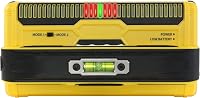
The Franklin Sensors ProSensor MAX has 13 sensors and two modes, including a deep-scan mode for thick or tough walls. Franklin says it scans through plaster and multiple material layers, with a maximum detection depth of 2.5 in.
What should you do when readings don't agree?
Don't drill based on a reading that shifts or spreads across several inches. Make another pass, change the scan direction, and compare the results before choosing a spot.
A stud's center should be more repeatable than a vague signal across a broad area. If the marks remain inconsistent, use another method suited to your wall, such as checking from an accessible attic or basement, or asking a qualified professional.
For a closer look at common sources of error, read what affects stud finder accuracy. A second method can help when a wall has repairs, unusual lath, or dense material.
Can a wall scanner help with plaster?
A wall scanner with settings for different wall types may give you more options. Its mode selection and detection method matter, so check the instructions for plaster use before scanning.
The Bosch D-tect 120 offers Drywall, Concrete, and Universal settings for unknown materials. Bosch says its radar technology can detect wood studs, live and non-live cables, water-filled plastic pipes, and metal.
No scanner makes every wall reading certain. Keep the likely stud location separate from any signal that could indicate wiring or plumbing, and follow the tool's safety directions.
How do you check for wires and pipes before drilling?
Treat a stud reading and a hazard check as separate steps. Wiring and pipes may run near studs, switches, outlets, sinks, or other fixtures.
A scanner with wire detection can help identify some live wiring, but detection depends on the tool and wall conditions. The Zircon MultiScanner A250c has AC Scan for live, unshielded wiring and WireWarning alerts in stud and metal modes; Zircon says to turn off power before drilling.
Read whether stud finders detect wires and pipes before working near electrical or plumbing fixtures. If you can't identify a possible hazard, stop and get qualified help.
Which stud finder should you use on plaster walls?
Choose a tool whose instructions cover the wall conditions you have. A deep-scan mode may suit thick layers, while a scanner with multiple material settings or wire detection can help answer other questions.
The ProSensor MAX is one option for layered surfaces because it has a deep-scan mode. The Bosch D-tect 120 has multiple wall settings, and the Zircon A250c adds stud, metal, and live-wire modes.
For more options, compare our guide to the best stud finder for plaster walls. Consider the wall's condition and the type of reading you need, then verify the location before drilling.
What is the safest way to find a stud in plaster?
Use repeatable readings, confirm the likely center, and check for hazards before drilling. Plaster and lath can confuse sensors, so use more than one pass and don't trust a single signal.
Choose a deep-scan tool for thick layers, a multi-setting scanner when the wall material is uncertain, or a model with wire detection when that check matters. If the readings stay unclear, use another way to inspect the wall before making a hole.
Frequently asked questions
Do stud finders work on plaster and lath?
Some can, but results depend on the wall and the tool. Plaster thickness, wood lath, repairs, and nearby metal can affect a sensor.
Scan slowly in both directions, mark repeatable readings, and confirm the likely stud location before drilling.
Why does my stud finder beep all over a plaster wall?
Plaster and lath can create uneven or dense layers that confuse some electronic sensors. Metal corner beads, nails, pipes, wiring, and patches can also trigger readings.
Try a different scan path and compare repeated marks instead of treating every beep as a stud.
Can a deep-scan stud finder detect studs through plaster?
A deep-scan mode may help when a wall has thick or layered material, but it can't guarantee a correct reading through every plaster and lath wall. Check the tool's instructions, scan in more than one direction, and verify the location before making a hole.
Is it safe to drill after a stud finder detects a stud?
A stud reading alone doesn't confirm that the spot is clear of pipes or wires. Check the area for outlets, switches, and plumbing, use a scanner with wire detection where appropriate, and turn off power before drilling if the tool or its instructions call for it.