Do Stud Finders Detect Wires and Pipes?
Some stud finders detect live wires, and some can locate metal pipes, but neither feature guarantees a clear path for drilling. Check the tool’s modes and confirm a safe spot before making a hole.
On this page (7 sections)
- Do stud finders detect wires?
- Can a stud finder detect pipes?
- What do wire and pipe alerts actually tell you?
- How should you scan before drilling?
- Which scanner fits your wire and pipe search?
- How can you reduce the risk of drilling into wires or pipes?
- Do stud finders detect wires and pipes well enough to drill?
Some stud finders detect live wires, and some can locate metal pipes, but neither feature guarantees that a spot is safe to drill. Check the tool’s detection modes, scan the area carefully, and treat an uncertain reading as a reason to pause.
A wire alert can help you avoid drilling into energized wiring. Metal detection may locate a metal pipe or other object, but it may not tell you exactly what the object is.
Features and limits vary by scanner and wall surface.
Do stud finders detect wires?
Some stud finders have a live wire detection feature that alerts you to energized electrical wiring behind a wall. The alert is a warning to investigate, not a promise that every wire will be detected.
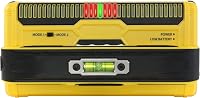
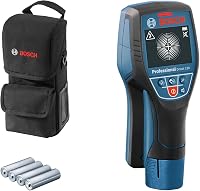
For example, Bosch says its GMS120-27 detects live AC wiring and uses a color-coded ring that turns red when it detects a live wire. Zircon’s MultiScanner A200 has WireWarning Detection to alert you to hot wires.
A wire feature may miss wiring because of the wall material, wire position, or scanning conditions. Follow the scanner’s instructions for calibration and movement, and don’t assume an area is clear just because the tool gives no alert.
Which stud finder features help with wire detection?
Look for a feature specifically described as live wire or hot wire detection. A scanner that only finds studs or metal may not warn you about energized wiring.
The Franklin Sensors ProSensor M210 includes live wire detection along with wood and metal stud finding. The Bosch scanner and Zircon A200 also combine wire alerts with other detection functions.
For more on the differences among sensing approaches, see our guide to stud finder sensor types. A wire alert remains only one input when choosing where to drill.
Can a stud finder detect pipes?
A scanner with metal detection may find metal pipes behind a wall. It may also detect other metal objects, so a signal alone does not identify the object as a pipe.
Zircon says the A200 can locate copper pipe, steel pipe, and other metal objects. Bosch says the GMS120-27 detects copper pipes.
Walabot DIY 2 is described as tracking pipes and wires, including plastic and metal pipes, but it is designed for drywall and plywood.
Plastic pipes can be difficult for basic metal detection because they aren't metal. A scanner that claims to track plastic pipes uses a different approach, and you should check its wall-surface limits before relying on it.
What do wire and pipe alerts actually tell you?
An alert means the scanner found something its sensor recognizes; it may not tell you the object’s exact path or purpose. Treat an alert as a reason to avoid that spot until you can confirm what is behind the wall.
A wire alert may correspond to energized wiring, while a metal scan could indicate a pipe, metal framing, a fastener, or another metal object. The mode and display help interpret the signal, but they don't replace inspection or safe work practices.
Walabot connects to a phone over its own Wi-Fi and visually identifies studs, pipes, and wires, according to its description. Its stated surface limits exclude lath and plaster, tile, brick, concrete, stucco, and metal-backed walls.
If you're unsure what the scanner found, don't drill through the signal. For help understanding inconsistent readings, see what affects stud finder accuracy.
How should you scan before drilling?
Read the scanner instructions, calibrate it as directed, and scan the area in more than one direction. Mark any alerts and avoid drilling until you understand what the tool is detecting.
Zircon advises placing the A200 flat against the wall, holding the power button, waiting for its calibration beep, then sliding slowly. Starting over a stud or moving during calibration can affect the scan.
A second pass can help you compare readings and estimate an object's direction. Keep in mind that a clear scan only reflects what the scanner can detect under those conditions.
What if the wall is plaster or another hard surface?
Use a scanner only on surfaces it supports. A tool that works on drywall may give unreliable readings on plaster, tile, brick, or a wall with metal behind it.
Walabot DIY 2 is limited to drywall and plywood. For other surfaces, check the tool’s instructions and learn how wall construction can affect results in our guide to stud finders on plaster and lath walls.
Which scanner fits your wire and pipe search?
Choose based on the objects you need to detect and the surface you’re scanning. A live wire alert, a metal scan, and visual tracking solve different parts of the problem.
The Franklin Sensors ProSensor M210 includes live wire detection and finds wood and metal studs. It may suit you if stud location is your main task and you also want a wire alert.
The Bosch GMS120-27 combines live wire, metal, wood stud, and copper pipe detection. Zircon’s A200 offers separate stud and metal modes, plus a hot wire alert.
For visual tracking of pipes and wires, Walabot DIY 2 is an option for drywall or plywood. Its surface restrictions make it a poor fit for many older or tiled walls.
How can you reduce the risk of drilling into wires or pipes?
Use the scanner as a warning tool, not a guarantee of a clear wall. If a reading is uncertain or the area may contain wiring or plumbing, stop and use a safer way to confirm the route before drilling.
Check for outlets, switches, faucets, and plumbing fixtures near the planned hole. Wiring and pipes can run in places that a stud finder does not reveal, so don’t rely on distance from a visible fixture alone.
When a project carries a serious risk, consult a qualified electrician or plumber. Use a suitable inspection method for the wall and follow local safety guidance.
Do stud finders detect wires and pipes well enough to drill?
They can help you spot some live wires and metal pipes, but a no-alert reading cannot prove a location is clear. Pick a scanner whose detection modes match the object and wall, then follow its instructions and investigate uncertain signals.
Choose the Franklin for stud finding with a live wire alert, the Bosch or Zircon for combined scanning features, or Walabot if visual tracking suits your drywall or plywood wall. For more on the limits of these tools, read are stud finders accurate?.
Frequently asked questions
Do stud finders detect electrical wires?
Some models include live wire detection, which can alert you to energized wiring behind a wall. The feature may not find every wire or work through every surface, so check the manual, scan carefully, and use caution before drilling.
Can a stud finder detect pipes?
Some wall scanners can detect metal objects such as copper or steel pipes, while others focus on studs or live wires. A metal scan may not identify what the object is, and nonmetal pipes can be harder to detect.
Check the tool’s modes and instructions.
Can I drill where a stud finder shows no wire?
A reading with no wire alert doesn't prove the spot is clear. Wire detection has limits, and cables may be positioned in unexpected ways.
Follow local safety guidance, check both sides of the wall when possible, and stop if you see or feel an obstruction.
Do all stud finders detect wires and pipes?
No. Features vary by model: some detect live wires, some scan for metal, and some combine several detection modes.
Read the instructions to learn what the tool detects and how to calibrate or position it for your wall.