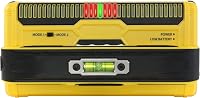
7 Best Stud Finder for Plaster Walls (November 2026)
The best stud finders for plaster and lath walls include the Franklin Sensors ProSensor MAX Stud Finder for thick plaster, the Franklin Sensors ProSensor M210 Stud Finder for full-width stud views, and the Zircon MultiScanner A250c Stud Finder for added scan modes.
On this page (5 sections)
The best stud finder for plaster walls is the Franklin Sensors ProSensor MAX, with 13 sensors and a deep scan mode for thick or tough surfaces. The ProSensor M210 is a strong alternative with full-width stud display and live wire detection, while the Zircon A250c adds separate metal and AC wire modes.
Plaster and lath can make a wall harder to scan than plain drywall. Wall thickness, metal lath and old repairs can all affect the signal, so use repeated scans and treat the tool as a guide rather than a guarantee.
If you're unsure how a scanner behaves on these walls, start with our guide to stud finders on plaster and lath. For a broader look at sensing methods, see stud finder sensor types.
Our picks at a glance
-
1

-
2
 Best for full-width stud views
Franklin Sensors ProSensor M210 Stud Finder
8.6/10 our score
See it on Amazon -
3

- 4
 Best for mixed wall materialsCheck it
- 5
 Best for jobsite scanningCheck it
- 6
 Check it
Zircon MultiScanner A200 Stud Finder
Best for routine wall checks - 7
 Check it
Cyber Tools Multi-Mode Wall Scanner
Best for a simple digital display
Which stud finder works best for plaster walls?
The Franklin Sensors ProSensor MAX is the top choice here because its 13 sensors and deep scan mode target thicker or tougher wall surfaces. The other picks suit buyers who also want wire alerts, multiple material modes or a simpler scan display.
We compared the stated sensing features, depth information, modes and wall materials for each model. Our score weighs specs and features against what you're shopping for, which is finding a useful stud signal through plaster without making unsupported claims about actual wall performance.
| Product | Best for | Sensors | Maximum detection depth | Modes | Our score |
|---|---|---|---|---|---|
| Franklin Sensors ProSensor MAX Stud Finder | thick plaster | 13 | 2.5 in | Normal and deep scan | 8.9 |
| Franklin Sensors ProSensor M210 Stud Finder | full-width stud views | 13 | 1.7 in | 8.6 | |
| Zircon MultiScanner A250c Stud Finder | added scan modes | 8.2 | |||
| Bosch D-tect 120 Wall Scanner | mixed wall materials | 8.0 | |||
| Bosch GMS120-27 Wall Scanner | jobsite scanning | 7.9 | |||
| Zircon MultiScanner A200 Stud Finder | routine wall checks | 7.4 | |||
| Cyber Tools Multi-Mode Wall Scanner | a simple digital display | Wood and metal | 6.9 |
The best stud finders for plaster and lath walls
Choose a scanner by the wall you have and the extra checks you need, since a deeper scan, a full-width display and wire detection solve different problems. No single feature removes the need to confirm a signal with more than one pass.
Franklin Sensors ProSensor MAX Stud Finder: Best for thick plaster
- 13 sensors
- Deep scan mode
- Detection depth up to 2.5 in
- Shows full stud width
Its deep scan mode and stated 2.5 in maximum depth make it the strongest fit for thick or layered plaster walls in this group.
Pros
- Deep scan mode for thick or tough walls
- Shows full stud width
- No calibration required
Cons
- Larger than the other Franklin pick
- Does not include a wire detection feature in the features
The ProSensor MAX is the clearest match for thick plaster in this group. Franklin Sensors says its 13 larger sensors can scan through multiple layers of materials including plaster, with maximum detection depth of 2.5 in.
It has two modes: a normal setting for drywall and a deep setting for thick or tough walls. The LED display shows the full width of a stud, including single or double studs, and the center LED turns green at the stud center.
No calibration is required before scanning, and Franklin says you can start anywhere, including over a stud. That can make setup simpler, though you should still move slowly and repeat a promising reading on a plaster wall.
Choose it when wall thickness is your main concern. Its stated depth is the largest in this roundup, but that number does not promise the same result through every plaster and lath combination.
Franklin Sensors ProSensor M210 Stud Finder: Best for full-width stud views
- 13 sensors
- Deep detection up to 1.7 in
- Shows full stud width
- Live wire detection
The M210 combines a full-width stud display with deep detection and live wire detection, making it a versatile choice for ordinary plaster and lath scans.
Pros
- Shows stud centers and double studs
- No calibration required
- Includes a built-in bubble level
Cons
- Less stated depth than the ProSensor MAX
- Batteries are not included
The ProSensor M210 fits buyers who want a broad stud display plus a wire alert. It uses 13 sensors to show the full width of a stud, and its deep detection is stated up to 1.7 in.
The center LED turns green to mark stud centers, and the display can show double studs. Franklin says it finds both wood and metal studs, with no calibration required before you start.
Its live wire detection adds a useful check before drilling, but wire detection is not a substitute for safe work practices. Keep the wall scanner instructions nearby, and shut off power if your project could reach wiring.
Choose this model if you want the full-width view and extra wire feature without needing the MAX's greater stated depth. It also has a built-in bubble level and a pencil caddy.
Zircon MultiScanner A250c Stud Finder: Best for added scan modes
- StudScan to 3/4 in
- DeepScan to 1 1/2 in
- Metal and AC wire modes
- ACT auto correction
Its separate stud, deep, metal and AC scan modes offer options for different wall checks, with a display that changes color by mode.
Pros
- Finds wood and metal stud centers and edges
- AC Scan and WireWarning features
- ACT helps correct common scanning mistakes
Cons
- DeepScan depth is below the Franklin MAX's stated maximum
- Battery is not included
The Zircon MultiScanner A250c suits a buyer who wants stud scanning plus separate metal and AC wire modes. StudScan reaches up to 3/4 in, while DeepScan is stated up to 1 1/2 in.
The color-coded display changes by mode: green for studs, blue for metal and red for AC wiring. It also has a SpotLite Pointer, audio alerts and on-screen indicators to help you see scan feedback.
ACT auto correcting technology helps improve scanning accuracy by recalibrating when needed. Signal strength indicators provide another cue, but repeat a scan before marking a drilling point in plaster.
This pick is useful when metal or wiring checks matter along with locating a stud. Zircon says AC Scan detects live, unshielded AC wires up to 2 in deep, and advises turning off power before drilling.
Bosch D-tect 120 Wall Scanner: Best for mixed wall materials
- Radar technology
- Drywall, concrete and universal settings
- Detects cables, pipes, studs and metals
- Uses AA batteries or 12 V Li-ion battery
Bosch's three settings cover drywall, concrete and unknown materials, while radar detection targets several object types behind a wall.
Pros
- Multiple wall material settings
- Detects live and non-live cables
- AA batteries and protective bag included
Cons
- No maximum plaster detection depth is stated here
- More focused on mixed-material scanning than a simple stud display
The Bosch D-tect 120 is the most flexible choice here for walls with uncertain materials. Its three settings cover drywall, concrete and universal mode for an unknown wall type.
Bosch says its radar technology detects live and non-live cables, water-filled plastic pipes, and magnetic and non-magnetic metal. The tool also has Spot View, which is intended to give results when there's little room to move the scanner.
The stated depth information varies by target: up to 60 mm for plastic pipes and live cables, 38 mm for wooden studs, and 120 mm for magnetic and non-magnetic metal. These figures describe different materials, so they should not be treated as one general plaster depth.
Choose it when the wall material is uncertain or you need to check more than studs. It includes 4 AA batteries, a battery adapter and a protective bag, with an option to use a 12 V Li-ion battery.
Bosch GMS120-27 Wall Scanner: Best for jobsite scanning
- Wood and metal stud detection
- Copper pipe and live AC wire detection
- Color-coded marking ring
- IP54 rated
A color-coded marking ring and detection for studs, pipes and live wiring make this a broad scanner option for renovation work.
Pros
- Detects wood and metal studs
- Finds copper pipes and live AC wiring
- AA batteries and soft pouch included
Cons
- No plaster-specific maximum depth is stated here
- Optional rechargeable battery is sold separately
The Bosch GMS120-27 is aimed at buyers who want one scanner for studs, metal, pipes and live wiring. Bosch describes it as a professional wall scanner with a graphical display and a color-coded marking ring.
The ring turns green for safe and red when live wire is detected. Its stated detection targets include wood studs, metal framing, copper pipes and live AC wiring behind drywall.
For work in dusty or damp settings, Bosch gives this model an IP54-rated body with shock-absorbing rubber casing. That describes its protection and casing, not a guarantee about how it will read through a particular plaster wall.
Choose it for broader renovation scanning where the extra target types matter. It runs on the included 2 AA batteries or an optional Bosch 3.7 V Li-Ion battery, sold separately.
Zircon MultiScanner A200 Stud Finder: Best for routine wall checks
- StudScan to 3/4 in
- DeepScan to 1 1/2 in
- Metal Scan
- WireWarning detection
The A200 combines stud, deep and metal scanning with a wire warning, giving you several useful checks in one tool.
Pros
- Finds stud edges and centers
- Separate DeepScan and Metal Scan modes
- LCD, audio tone and SpotLite guidance
Cons
- DeepScan depth is below the Franklin MAX's stated maximum
- Requires a 9V alkaline battery
The Zircon A200 gives you three scan options for routine wall checks. StudScan reaches up to 3/4 in, DeepScan up to 1 1/2 in, and Metal Scan helps locate metal behind walls.
Its LCD, audio tone and SpotLite Pointer provide several ways to read a result. WireWarning detection can alert you to hot electrical wires, and the tool also finds stud edges and centers.
The A200 needs careful startup: place it flat against the wall, press and hold the power button, then wait for the calibration beep before moving it. That sequence matters because moving during calibration can affect the scan.
Choose it for a scanner with separate stud, deep and metal modes. For a wall with suspected wiring, pair its alert with sensible electrical precautions and the advice in our guide to stud finder wire and pipe detection.
Cyber Tools Multi-Mode Wall Scanner: Best for a simple digital display
- Wood and metal modes
- Digital display
- Rechargeable battery
- Described for plaster and shear walls
This scanner is described for plaster and shear walls and pairs wood and metal modes with a digital display.
Pros
- Rechargeable battery
- Digital display shows results and signal strength
- Lightweight at 5.28 oz
Cons
- No maximum detection depth is stated here
- No wire detection feature is specified
The Cyber Tools Multi-Mode Wall Scanner is a basic option described for plaster and shear walls. Its wood and metal modes appear on a digital display that shows detection results, signal strength and mode selection.
It is also rechargeable and weighs 5.28 oz. Those details may appeal if you prefer a lighter tool and want to avoid replacing disposable batteries.
The available feature details do not state a maximum detection depth or a wire detection mode. That makes it harder to compare with scanners that publish specific depth figures or include live wire alerts.
Choose it if the stated wall types and digital display match your needs. If you need deeper scanning or wiring checks, the Franklin MAX, Franklin M210 or a Zircon MultiScanner provides more clearly stated features.
What should you look for in a stud finder for plaster walls?
For plaster walls, look first for a deep scan mode or a stated sensing depth that fits your wall, then consider whether you need full-width stud display or metal and wire detection. A larger depth number can help with thick surfaces, but wall construction still affects results.
Is a deep scan mode useful on plaster and lath?
A deep scan mode can help when plaster is thick or layered, but it cannot ensure a reading through every wall. The Franklin MAX offers a dedicated deep mode and a stated maximum depth of 2.5 in, while the Zircon A250c and A200 list DeepScan to 1 1/2 in.
Check the wall surface first and scan at more than one height. If the tool gives inconsistent results, use another method to confirm the stud before drilling.
Does a full-width display help?
A full-width display can make it easier to see where a stud begins and ends, rather than relying on one edge mark. Both Franklin models here show the full stud width, and their center LEDs indicate the center.
That can help when positioning a bracket or shelf mount. Mark both edges, identify the center, then repeat the scan to see whether the signal stays consistent.
Should a plaster wall scanner also detect wires or metal?
Wire and metal modes can add useful information before drilling, especially around older walls or renovations. The A250c and A200 have metal and wire features, while the Bosch scanners list several target types.
A scanner's alert does not mean the wall is clear. Read what stud finders can and can't detect about wires and pipes before making a hole.
How do you get a more reliable reading through plaster?
A more reliable reading comes from slow, repeated passes with the scanner used as directed. Mark the edges of a signal, then check the same area again from a nearby height before choosing a drill point.
Start with a clean, flat area of wall and use the mode that fits the tool and wall. For scanners that require calibration, hold the tool still until calibration finishes; Zircon's A200 instructions call for a short calibration beep before scanning.
If the reading shifts or appears too broad, pause and rescan. Plaster thickness, lath and repairs can affect signals, so use our stud finder accuracy guide to understand common causes of inconsistent results.
Which stud finder should you choose for plaster?
Pick the Franklin ProSensor MAX if thick plaster is your main concern, and choose the M210 if you want full-width stud viewing with live wire detection. The Zircon A250c makes more sense when separate metal and AC wire modes matter, while Bosch's scanners suit mixed-material checks.
For general scanning advice, browse the wall scanner guide. If you're still deciding whether a tool will work on your wall construction, start with our plaster and lath stud finder guide.
Our top 3 picks at a glance
-
1
-
2
Best for full-width stud views
Franklin Sensors ProSensor M210 Stud Finder
8.6/10 our score
See it on Amazon -
3
Frequently asked questions
What is the best stud finder for plaster and lath walls?
The Franklin Sensors ProSensor MAX is the strongest fit in this group for thick plaster because it has a deep scan mode and a stated maximum detection depth of 2.5 in. Plaster thickness and lath can affect readings, so scan slowly and confirm a target with repeated passes before drilling.
Do stud finders work through plaster and lath?
Some can, but results depend on wall thickness, lath and the scanner's sensing method. A model with a deep scan mode or multiple sensors may help with thicker surfaces.
Read our guide to using stud finders on plaster and lath for scanning steps and limits.
How do you scan a plaster wall for studs?
Check the tool's instructions for the correct mode, then move it slowly across the wall and mark both sides of a repeated signal. Repeat the scan at a nearby height to see whether the marks line up.
Do not rely on one reading before drilling, especially around possible wiring or pipes.
Can a stud finder detect wires in plaster walls?
Some wall scanners include live wire detection, but that feature does not guarantee that every wire will be found. The Zircon A250c and Franklin M210 include wire detection features.
See what stud finders can detect about wires and pipes, and turn off power before drilling when a wire may be present.
Why do stud finder readings change on plaster?
Thick or uneven plaster, lath, metal and surface changes can affect a scanner's readings. Recalibration needs also vary by tool.
Compare repeated passes and check what affects stud finder accuracy before choosing a drill location.