Rotary Laser vs Line Laser: Which Fits Your Project? (November 2026)
Choose a rotary laser for broad outdoor elevation work and a line laser for indoor layout around walls and rooms. Your working area, receiver needs and project type matter more than the laser format alone.
On this page (8 sections)
- Rotary laser vs line laser: which is better for your project?
- How do range and visibility differ?
- What setup does each laser need?
- Which laser should you choose?
- What is the main difference between rotary and line lasers?
- Can one laser handle both indoor and outdoor jobs?
- Which one is easier for a homeowner to use?
- Which should you buy: a rotary laser or a line laser?
Choose a rotary laser for broad outdoor elevation work and a line laser for indoor layout around walls and rooms. In a rotary laser vs line laser comparison, the right choice depends on how far you need to work and whether you need a receiver to find the beam.
A rotary laser spins a beam around a level plane. A line laser projects one or more visible lines, which can make room layout easier when you need a reference on several walls.
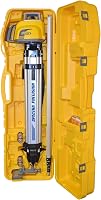
The Topcon RL-H5A includes an LS-80 receiver and is suited to grading, excavation and general construction. The Huepar 3x360 projects one horizontal and two vertical 360° lines for indoor layout.
Rotary laser vs line laser: which is better for your project?
Choose a rotary laser for broad elevation checks and a line laser for visible room layout. The distinction is how each tool presents its reference, not simply whether one is more accurate.
A rotary laser creates a level plane as its head rotates. A receiver helps you find that plane at a distance, which is useful when you’re checking heights across a site.
A line laser projects straight horizontal or vertical lines onto surfaces. Those lines can make it easier to align cabinets, tile or pictures without moving a receiver from point to point.
Which tool suits outdoor grading?
A rotary laser with a receiver is usually the practical pick for grading across an open area. It lets you compare ground elevations against a consistent reference plane.
The Topcon RL-H5A has an 800 m diameter range with its LS-80 receiver. Topcon describes it for grading, excavation and general construction, and gives it an IP66 rating for dust and water protection.
The VEVOR rotary kit has a stated working distance of up to 984 ft with its receiver. It also includes a remote control, which can help when adjusting the setup from farther away.
For the workflow, see how to set up and use a rotary laser level. If you’re comparing models for site work, the best rotary laser levels for grading guide narrows the choice by job needs.
Which tool suits indoor layout?
A line laser is usually easier for indoor work that needs visible references on walls. A 360° model can carry a horizontal or vertical line around the room.
Huepar’s 3x360 projects one horizontal and two vertical 360° lines. That layout can help with picture hanging, tile, cabinets, wallpaper and ceiling work.
For a straight picture wall, follow the laser level picture-hanging steps. If you want a broad overview of beam formats and kits, start with the laser level buying guide.
How do range and visibility differ?
Rotary lasers pair long-range work with a receiver, while line lasers are easiest to use where their projected lines remain visible. Range figures need context because the measuring conditions and included receiver matter.
The Topcon RL-H5A’s stated 800 m diameter range is for use with its receiver. The VEVOR’s stated 984 ft working distance also depends on using the receiver.
Huepar gives its 3x360 a working range up to 98 ft at 100 lux. Its pulse mode can extend range up to 200 ft when used with a Huepar detector.
Bright sun, distance and surfaces can affect whether a beam is easy to see. Huepar advises avoiding reflective or shiny surfaces because they can create apparent extra lines.
Do you need a detector or receiver?
You need a receiver when the beam is hard to see and the laser supports receiver use. It helps identify the beam’s position, but compatibility and operating mode matter.
The Topcon package includes the LS-80 receiver and a sensor holder. The VEVOR kit includes a receiver, while Huepar’s pulse mode requires a Huepar detector for its extended range.
Check the exact receiver compatibility before buying accessories. Don’t assume that one brand’s detector will work with another brand’s laser.
What setup does each laser need?
A line laser often needs a nearby mounting point, while a rotary setup typically needs stable placement and a receiver for distant readings. The right setup depends on how much of the work area you need to cover.
Huepar includes a 360° magnetic bracket and a 1/4 in-20 mounting thread. The bracket can attach to metallic surfaces, and it also has 1/4 in-20 and 5/8 in-11 mount threads.
For a rotary laser, place the unit where it can cover the work area and set up the receiver at the points you need to check. Follow the tool’s instructions for leveling and receiver readings.
Topcon’s electronic self-leveling relevels automatically if the unit is disturbed. VEVOR specifies ±5° self-leveling and manual mode, so keep the setup within the range stated for the model.
How do you check accuracy before work?
Check the laser against a known reference before relying on it for a long layout. A simple comparison can catch setup errors before they spread across a room or site.
Set the unit on a stable surface and mark a reference line or point. Rotate or reposition it as directed by the manual, then compare the projected reference with your mark.
If the readings disagree, repeat the check and review the setup instructions. Our guide to checking laser level accuracy and calibration explains a careful way to confirm a tool before use.
Which laser should you choose?
Pick a rotary laser for grading and broad site work, and a line laser for wall, ceiling or floor layout indoors. If your projects span both settings, choose based on the task you do most and whether you’ll use a receiver.
The Topcon RL-H5A is the stronger match for construction and grading where long-distance elevation checks matter. Its receiver is included, and Topcon specifies an 800 m diameter range.
The Huepar is the better fit for room layout where three 360° lines can help you align work across multiple walls. For a closer look at room-spanning line models, see the best 360 laser levels for rooms and tile.
The VEVOR is a rotary option with a receiver, remote control and stated 984 ft working distance. Consider it when those included parts and its range fit the work area.
| Product | Best for | Range | Self-leveling | Included | Our score |
|---|---|---|---|---|---|
| Topcon RL-H5A Rotary Laser with LS-80 Receiver | grading and site work | 800 m diameter with receiver | Electronic | LS-80 receiver, sensor holder, carry case | 9.0 |
| Huepar 3x360 Rechargeable Green Laser Level | indoor room layout | Up to 98 ft at 100 lux | 8.9 | ||
| VEVOR 984 Ft Red Rotary Laser Kit | a bundled rotary setup | Up to 984 ft with receiver | Receiver, remote control, hard case | 7.6 |
What is the main difference between rotary and line lasers?
A rotary laser spins a beam to create a level plane, while a line laser projects straight lines onto nearby surfaces. That makes rotary tools well suited to elevation work across a site and line tools convenient for indoor alignment.
Both types can support layout tasks, but their best uses differ. Think about the area you need to cover, how visible the beam will be and whether you’re willing to use a receiver.
Can one laser handle both indoor and outdoor jobs?
Some models can work in both settings, but range, visibility and accessories decide how practical they are. A line laser with pulse mode and a compatible detector can extend outdoors, while a rotary laser can also help with indoor leveling.
Huepar’s line laser supports pulse mode with a Huepar detector. VEVOR describes its rotary laser for indoor and outdoor use, and Topcon describes its model for construction applications.
Check the manual for the exact operating mode and accessory requirements. A tool’s outdoor label doesn’t mean its beam will be easy to see in direct sunlight.
Which one is easier for a homeowner to use?
A line laser is often simpler for a homeowner doing wall or room projects. Its projected lines are easy to place against a nearby surface, and a 360° model can help with multiple walls.
A rotary laser may make more sense if you’re leveling a large yard, setting grades or checking elevations over a wider area. The receiver adds a step, but it helps locate the rotating beam when you can’t see it clearly.
For a broader choice by project and kit, use the laser level buying guide. Pick the tool whose setup you can repeat reliably.
Which should you buy: a rotary laser or a line laser?
Choose the Topcon rotary for site grading, the Huepar line laser for indoor layout, and the VEVOR rotary kit when its bundled receiver and remote suit your work. Your project area and need for receiver readings are the clearest decision points.
For walls, tile and pictures, a 360° line laser keeps references visible across the room. For ground, excavation and long elevation checks, a rotary laser and receiver make more sense.
Frequently asked questions
Is a rotary laser better than a line laser?
A rotary laser is usually the better fit for broad outdoor elevation work, especially when paired with a receiver. A line laser is usually easier for indoor layout because it projects visible horizontal or vertical lines across walls.
Choose based on work area and setup needs.
Can a line laser be used outdoors?
Some line lasers can work outdoors with a compatible detector, but bright light can make the beam hard to see. The Huepar 3x360 supports pulse mode up to 200 feet with a Huepar detector, and its instructions say a receiver is needed in bright-light conditions or outdoors.
Do you need a receiver with a rotary laser?
A receiver helps you locate the rotary laser plane when the beam is difficult to see across a work area. The Topcon RL-H5A includes an LS-80 receiver, and the VEVOR kit includes a receiver.
Check compatibility before pairing a receiver with another laser.
Which laser is better for hanging pictures?
A line laser is generally more convenient for a picture wall because its visible horizontal line gives you a reference across the room. A 360° model can project that line around the room, while a rotary setup is often more suited to site-wide leveling.
Can a rotary laser level ground?
Yes, a rotary laser can support grading and elevation checks when used with a receiver and a suitable grade rod. The Topcon RL-H5A is designed for grading and excavation applications.
Follow the laser and receiver instructions to take and compare readings safely.