How to Level Ground in Your Yard With a Laser Level
To use a laser level to level ground, set a target height, take readings across a grid, then cut high spots and fill low ones until the ground meets your plan. Use a receiver outdoors and check drainage before moving soil.
On this page (6 sections)
To use a laser level to level ground, set a target height, measure the ground on a grid, and move soil until the readings match your planned grade. Outdoors, use a compatible receiver because sunlight can make the beam difficult to see.
Level ground does not always mean a perfectly flat surface. A yard, shed base, or patio may need a planned slope to move water away from buildings and toward a suitable drainage area.
What do you need to level ground with a laser?
You need a laser level, a compatible receiver, a grade rod, and a clear plan for where water should go. A rotary laser is useful for covering a broad area, while a receiver helps you read the beam when you cannot see it clearly.
A receiver may need a laser in pulse mode, and receivers are not all compatible with every laser. Check the instructions for both tools before starting.
For help choosing a system, read our guide to rotary laser setup and use and comparison of rotary and line lasers.
The VEVOR kit is a red horizontal rotary laser with a stated working distance of up to 984 ft when used with its receiver. The kit includes a tripod and grade rod, which can help when you need to check many points from one setup.
DOVOH says its H3 kit can work up to 400 ft with the receiver, and notes that the beam is hard to see directly in sunlight. Its grade rod is sold separately, so plan for one if your work requires rod readings.
How do you set a target grade?
Choose a finished height and drainage direction before taking readings. A uniformly flat surface may trap water, so decide whether your project needs level ground or a gentle planned slope.
Mark the work area's corners and any fixed points you need to protect, such as a threshold, drain, or path edge. Check local requirements and call the appropriate utility service before digging where buried lines may be present.
Set the laser on stable ground or a tripod where it can reach the full area. Follow the manual's setup instructions, let a self-leveling unit settle, and confirm that the receiver detects the signal before recording measurements.
For more involved grading, our guide to the best rotary laser level for grading and site work compares options for outdoor projects. A receiver such as the AdirPro LD-8 is made for most standard red rotary lasers; check your laser's compatibility before pairing them.
The AdirPro LD-8 has dual displays and a rod clamp. Its stated range depends on the laser, so confirm compatibility and working distance for your setup.
How do you take readings across the yard?
Record a reading at each point in a grid, keeping the rod upright and the receiver in the same position. Consistent measurements make it easier to spot where the ground rises or falls.
- Mark a grid across the area, adding points at edges and obvious dips or humps.
- Place the grade rod vertically at the first point.
- Move the receiver until it signals the laser reference, then record the rod reading.
- Repeat at each grid point without changing the receiver's reference setting.
- Compare each reading with your target and mark high and low spots.
A grade rod reading measures the distance from the ground to the laser reference. If the rod reading is larger than your target reading, the ground is lower at that point; if it is smaller, the ground is higher.
Keep the rod vertical. Tilting it can make the reading inaccurate, and moving the laser after you begin can change the reference.
If you must move the setup, recheck a known point before continuing.
What receiver helps with yard grading?
A receiver helps when sunlight or distance makes the beam hard to see. Choose one that works with your laser and can attach securely to the rod.
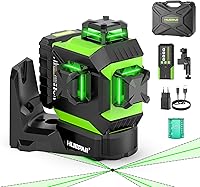
The Huepar W04CG kit includes a receiver and supports pulse mode for longer-distance work. Huepar states a range of up to 400 ft with the receiver and pulse mode; the kit also includes four 360-degree laser planes for indoor layout needs.
Use the receiver instructions to set the detection mode and sensitivity. A receiver's range and accuracy depend on the laser, setup, and conditions, so verify the signal before moving soil.
How do you cut high spots and fill low spots?
Remove soil from marked high areas and add suitable fill to low areas in layers. Recheck the grid after each pass instead of moving a large amount of soil based on one measurement.
Rake or scrape the high spots down, then compact the surface as appropriate for the project. Add fill to low spots in manageable layers, compacting each one before checking again.
Avoid burying topsoil under fill if the finished area will support plants. For a base that must carry a shed, path, or patio, use materials and compaction methods suited to that project.
How do you check a laser level for grading dirt?
Take new readings at the same grid points after moving soil. Compare each with the target and keep adjusting until the measurements are consistent with the planned grade.
For a small patch, a few readings may be enough to find a clear high or low area. Larger yards need more points, especially where the ground changes direction or meets a foundation, walkway, or drain.
If readings jump unexpectedly, check that the rod is upright, the receiver is fixed at the right height, and the laser has not moved. For help with a questionable reference, see how to check a laser level's accuracy.
How do you keep water draining the right way?
Check the finished slope with your drainage plan before calling the surface level. Water should not be directed toward a building or onto a neighbor's property.
Use the laser readings to confirm the height at both ends of the area, then check intermediate points for dips that could hold water. Follow local guidance on drainage near foundations, property lines, sidewalks, and storm drains.
If the project meets a building or property boundary, check with local officials or a qualified site professional before changing elevations. A level surface can still create a drainage problem if the surrounding ground is higher.
What should you do before finishing the surface?
Take one final grid of readings and inspect the area after compaction. Fix remaining humps and depressions before laying sod, gravel, pavers, or a base material.
Keep a simple record of the target and readings so you can spot an outlier. If the results vary more than expected, recheck the laser setup and receiver compatibility before making another adjustment.
Choose a rotary kit if you need to cover a broad yard from one setup. Choose a receiver that matches your laser, and add a grade rod if your kit does not include one.
For a fence project next, follow our guide to setting fence posts with a laser level.
Frequently asked questions
Can you use a laser level to grade dirt?
Yes. Set a target height, use a receiver on a grade rod to take readings across the work area, and move soil where readings show high or low spots.
Check the grade against your drainage plan, and confirm the laser and receiver are compatible before relying on their readings outdoors.
What kind of laser level works best for leveling a yard?
A rotary laser with a receiver is a practical choice for a large outdoor area because the receiver can detect the laser signal when the beam is hard to see. For a smaller area, a compatible self-leveling laser and receiver may also work; choose based on range, setup, and the shape of the site.
How far apart should ground readings be?
Take readings on a grid close enough to reveal dips and humps, with tighter spacing around edges, drains, and visible changes in slope. There is no single spacing for every yard: use more points for uneven ground, a small work area, or a project that needs a careful grade.
Should ground slope toward or away from a house?
Ground next to a house should generally drain away from the foundation, but the right slope depends on local rules, nearby structures, and the drainage plan. Check local guidance before changing grade, especially near a foundation, property line, utility, or drain.